Enterprise · Explainer
Why Are Computers Getting More Expensive in 2026?
Memory shortages and AI infrastructure demand are putting pressure on PC costs. For US buyers, the bigger bill can also reflect changing specifications, fewer budget choices and the timing of a replacement purchase.
Independent coverage
By Future Chronicle
Published 26 October 2026
11 min read
Evidence: Analysis
A computer purchase used to come with a reassuring assumption: wait long enough and the same money would buy a better machine. That was never a guarantee for every model, but it was a reasonable starting point. In 2026, buyers cannot rely on it. A laptop that looks like an ordinary replacement can arrive with a higher quote, a less generous configuration or fewer alternatives at the affordable end of the shelf.
The short answer is that memory and storage supply are under pressure, partly because chipmakers are serving the much larger demands of AI infrastructure. Manufacturers then decide how much of the extra cost to absorb, which configurations to keep and which customers to prioritize. New specifications and replacement cycles complicate the comparison further. But the premise needs a qualification: the available evidence does not establish that every computer sold in the United States has become more expensive, or that all price increases have the same cause.
This is a source-based explanation, not a survey of US retail transactions. It separates component-market forecasts from observed business results and from practical purchasing analysis. Those distinctions matter when a headline about memory prices becomes a claim about what a family should pay for a school laptop.
The clearest pressure is inside the machine
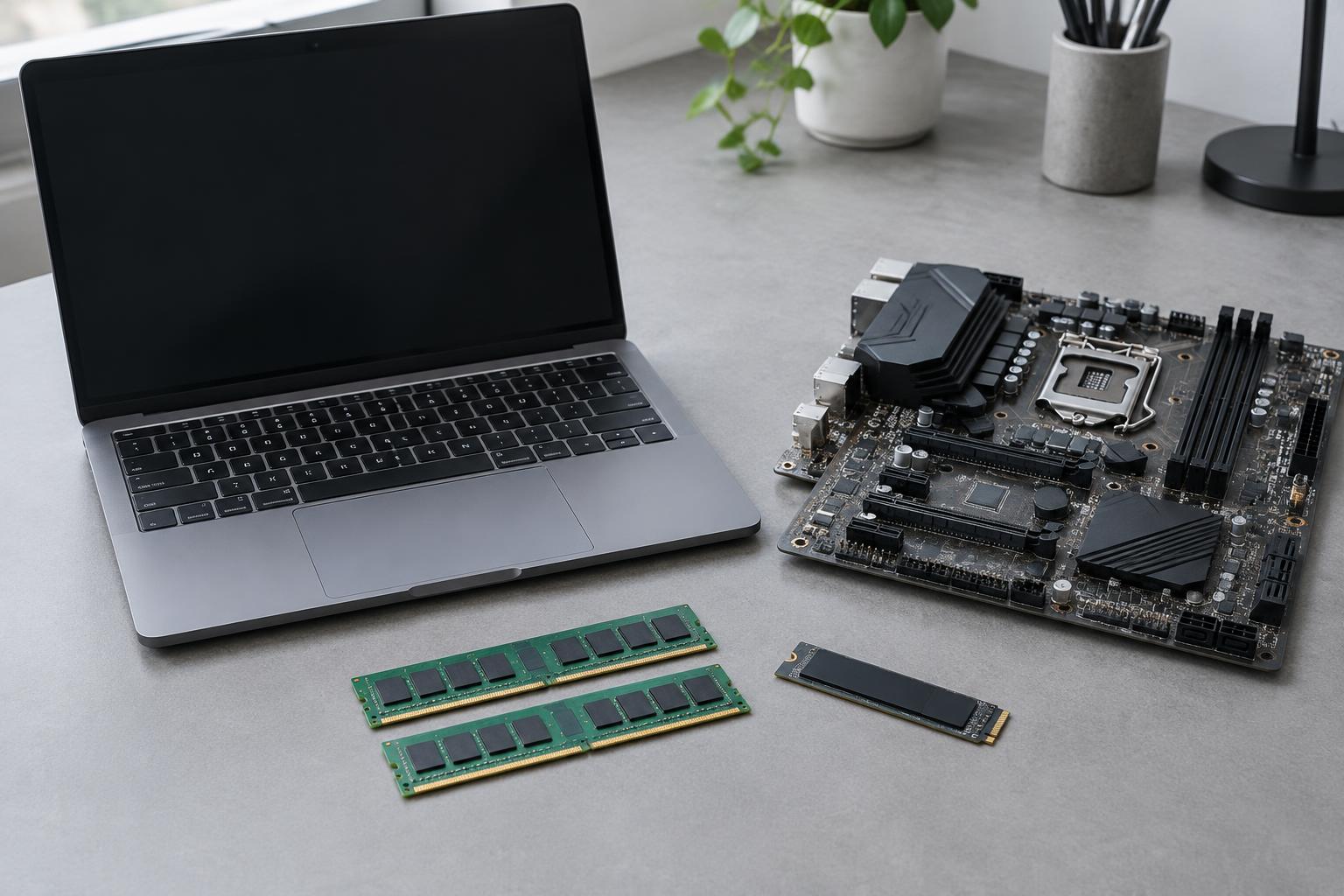
A PC needs working memory and persistent storage. DRAM holds the data that applications are actively using. NAND flash underlies the solid-state drive that stores the operating system, software and files. They are different products with different production economics, but a shortage or price increase in either can change the cost of building a computer.
In its July 3 outlook, TrendForce forecast third-quarter 2026 contract-price increases of 13 to 18 percent quarter over quarter for conventional DRAM and 10 to 15 percent for NAND flash. It also described capacity being reallocated toward server applications, reducing the supply available for PC DRAM. The firm expected higher component costs to work through notebook inventories and put upward pressure on retail prices.
These percentages are not a measured increase in the price of an American laptop. They are forecasts for upstream contract markets, covering a particular quarter. Nor should they be added together and applied to a whole computer. Memory and storage account for only part of the bill, alongside the processor, display, battery, chassis, assembly, distribution and other costs.
The practical consequence is less dramatic than the largest component headline, but more persistent. A manufacturer negotiating its next production run may face a different cost base from the one behind machines already sitting in a retailer's warehouse. Two apparently similar offers can therefore reflect different purchasing dates and inventory positions.
How the AI boom reaches an ordinary laptop
The link to AI is a supply-allocation story, not a claim that a consumer laptop contains the same hardware as a data-center accelerator. AI systems use high-bandwidth memory, or HBM, alongside substantial server memory and storage. A notebook typically uses conventional memory designed around different power, packaging and cost requirements.
The connection lies in the suppliers and the investments they make. TrendForce's outlook describes manufacturers prioritizing server applications. Micron's fiscal second-quarter earnings announcement, dated March 18, also characterized the industry as experiencing strong demand and tight supply. Micron's results cover its wider business, however, not a clean measure of the price of memory in a consumer PC.
Production capacity is not infinitely interchangeable. Different products require different processes, testing and packaging, and changing a factory's output is not as simple as changing a label on a box. Still, when suppliers direct scarce investment and available output toward server customers, PC buyers can face tighter supply or less favorable prices. That is the mechanism supported by the industry sources. They do not isolate a dollar amount that AI alone has added to a specific laptop.
There is a further distinction between AI infrastructure and an AI-branded PC. The former can affect component availability across the market. The latter is a purchasing choice about local capabilities, processors and memory. Paying for a more expensive computer marketed around AI is not necessarily the same thing as paying more for an unchanged computer because of a shortage.
A higher average price can hide several different changes
The phrase 'computer prices are rising' can describe at least three situations. The identical configuration costs more. A replacement model costs more but also includes better hardware. Or the market sells a larger share of premium machines, raising the average price even when individual models have not changed. Each situation has a different implication for a buyer.
For example, comparing a discounted older laptop with a newly released model that has more memory, a different display and a longer support package does not establish like-for-like inflation. The higher bill is real. The comparison simply cannot tell you how much comes from increased production costs and how much comes from buying a different product.
Official statistics address part of this problem. The Bureau of Labor Statistics explains its computer-related CPI category as including desktops, notebooks, tablets, peripherals and smart-home assistant devices. Its quality-adjustment methodology aims to separate estimated changes in quality from changes in price when products are replaced in the sample.
A quality-adjusted index therefore answers a different question from the one a shopper asks at checkout. Better hardware can offset some price increase in statistical terms, while the household still needs more cash to buy the replacement. Conversely, a headline about the average selling price of PCs may reflect product mix rather than a uniform increase across the shelf. Neither measure should be substituted casually for a US laptop price survey.
Budget buyers can feel the squeeze first
When components become more expensive, a manufacturer has several options. It can raise the selling price, accept a lower margin, reduce a configuration, remove discounts or concentrate production on models that can support higher margins. These are possible responses, not findings from a model-by-model audit conducted by this publication.
The distinction matters most at the affordable end of the market. A machine can remain at a familiar advertised price while offering less storage or memory than a buyer expected. Alternatively, the entry model may disappear and the next available configuration becomes the effective starting price. A price tag that has not changed does not prove that value has held steady.
IDC's June 2 market outlook described a persistent memory shortage, rising prices and difficulty maintaining full product portfolios. It forecast an 11.3 percent decline in global PC shipments for 2026 and expected no meaningful shortage relief before the end of 2027. That was an outlook issued in June, not a completed full-year result or a promise about when US retail prices will fall.
For a household, availability can be as important as an average price. If the suitable budget model is unavailable, the purchase decision becomes a choice between waiting, accepting a weaker specification or spending more. Business buyers encounter the same issue when a standardized configuration cannot be supplied consistently across offices.
Windows replacement demand adds context, not a universal explanation
Microsoft ended ordinary Windows 10 support on October 14, 2025, a date confirmed in its Windows 10 support information. For organizations with older fleets, the transition creates a reason to assess replacement, compatibility and any applicable extended-security options rather than treating the old setup as indefinitely unchanged.
That can bring purchasing decisions forward. It does not mean every Windows 10 computer must be thrown away, or that the support deadline independently caused every PC price increase. Some machines can move to a supported operating system; others need replacement for technical, security or business reasons. The correct decision depends on the device and its use.
For a US company, the cost of a replacement is also larger than the hardware invoice. Deployment work, application compatibility, docking equipment, endpoint management and support commitments belong in the comparison. A lower sticker price can still be a poor deal if it creates avoidable maintenance work or forces another replacement too soon.
Do tariffs explain the increase? Not without checking the product
Tariffs and trade restrictions are relevant questions for a US hardware purchase, but they are not a safe catch-all explanation. A computer can involve parts made in several countries and final assembly in another. The applicable treatment depends on the product, its classification and the rules in force at the time of import.
This article does not assign a single tariff rate to all PCs or claim a measured tariff contribution to their prices. Buyers evaluating a tariff surcharge should ask the seller what item it covers, which rule applies and whether the charge is already included in the quoted total. The verified component-supply evidence above is stronger than a blanket explanation based on a product's brand or an assumed country of origin.
How to compare computers without being misled by the headline
Start with the work rather than the newest product category. A browser-and-document machine, a workstation for large design files and a gaming PC have different requirements. Write down the applications that must run, the memory they need in normal use, storage requirements and any display or battery constraints. Paying for capabilities you will not use is not protection against inflation.
Then compare exact configurations. Record the processor generation, installed memory, storage capacity, display, warranty, condition and whether upgrades are possible. Check the total price after delivery and taxes, not just an introductory figure. Keep a dated copy of the offer so that a later discount can be compared with the same specification rather than with a changed listing.
Upgradeability deserves particular attention in a tight memory market. A machine with replaceable memory or storage may offer a path to extending its useful life. A thin laptop with soldered memory requires the buyer to choose the capacity at purchase. Neither design is automatically better, but an advertised entry price becomes less useful if the entry configuration cannot support the intended workload for long.
A previous-generation or refurbished machine can be worth considering if it meets the actual requirement. Check the seller, return policy, warranty, battery condition, operating-system support and any account or organization locks. These are alternatives to investigate, not a claim that refurbished computers are always cheaper or that older stock is immune to current component costs.
Business buyers should ask for quote validity, substitution terms and realistic delivery dates. If a supplier proposes a replacement configuration, compare it explicitly with the original rather than accepting 'equivalent' as a complete specification. For a fleet, a small difference in memory, docking compatibility or warranty can become a recurring support cost.
Should you buy now or wait?
If the existing machine is supported, reliable and adequate, there is no need to replace it merely because AI features are fashionable. If it is failing or creates a security problem, waiting for a predicted market correction can be more expensive than purchasing a suitable replacement. The decision should turn on the cost of waiting and the available quote, not on an unverified claim that prices are about to collapse.
Nor is a component-price forecast a dependable holiday-shopping calendar. Retailers can discount older inventory even while new production becomes more expensive. Manufacturers can absorb costs temporarily, change specifications or revise product plans. Supply relief would be encouraging, but it would not ensure that every brand passes savings through at the same time.
The useful conclusion is narrower than 'all computers are expensive now.' In 2026, documented memory-supply pressures make a return to automatically improving PC value less certain. Buyers can respond by comparing like with like, protecting essential specifications and resisting upgrades that solve no real problem. The best purchase is the least expensive supported machine that reliably does the work, not the machine with the most persuasive explanation for its higher price.
Limitations and what would change this assessment
This AI-assisted article synthesizes opened industry outlooks, a manufacturer earnings release and official methodology and support documents. It contains no original interviews, retail-price dataset or independent hardware tests. Its central numerical price evidence is a third-quarter contract-price forecast, not a measured US checkout-price increase. The IDC figures are global shipment forecasts issued in June, and Micron's commentary reflects a supplier's perspective. The BLS methodology explains price measurement but does not, by itself, establish a 2026 increase.
The assessment should be revisited as realized component-price data, later market reports and comparable US retail offers become available. Demand, supply investment, inventory and product mix can all change. No single percentage here should be used to predict the price of a particular laptop, and no shortage forecast guarantees that waiting until a specified year will produce a better deal.
Sources
- TrendForce, July 3, 2026: third-quarter DRAM and NAND contract-price outlook
- IDC, June 2, 2026: PC market outlook and persistent memory shortage
- Micron, March 18, 2026: fiscal second-quarter results and supply commentary
- BLS: how computer-related consumer prices are measured
- BLS: quality adjustment in the Consumer Price Index
- Microsoft: Windows 10 support and transition information