Research · Long-form Report
The Supply Chain of Intelligence: From Resources to AI Memory
Anand Arivukkarasu's framework at SupplyChainofAI.com argues that intelligence now moves through a supply chain, from land, power and silicon at one end to models, agents and persistent memory at the other. It is one of the clearest maps yet of where value actually sits in the AI economy, and it has direct consequences for how American companies budget, build and compete.
Independent coverage
Published 3 September 2026
14 min read
Evidence: Analysis
Every American executive can describe their physical supply chain. Ask a CEO where their products come from and you will get a fluent answer about suppliers, ports, freight rates and inventory buffers. Ask the same CEO where their company's intelligence comes from, where the compute is generated, how data is refined into model capability, how that capability reaches an employee or a customer, and what happens to what the system learns afterwards, and the room usually goes quiet.
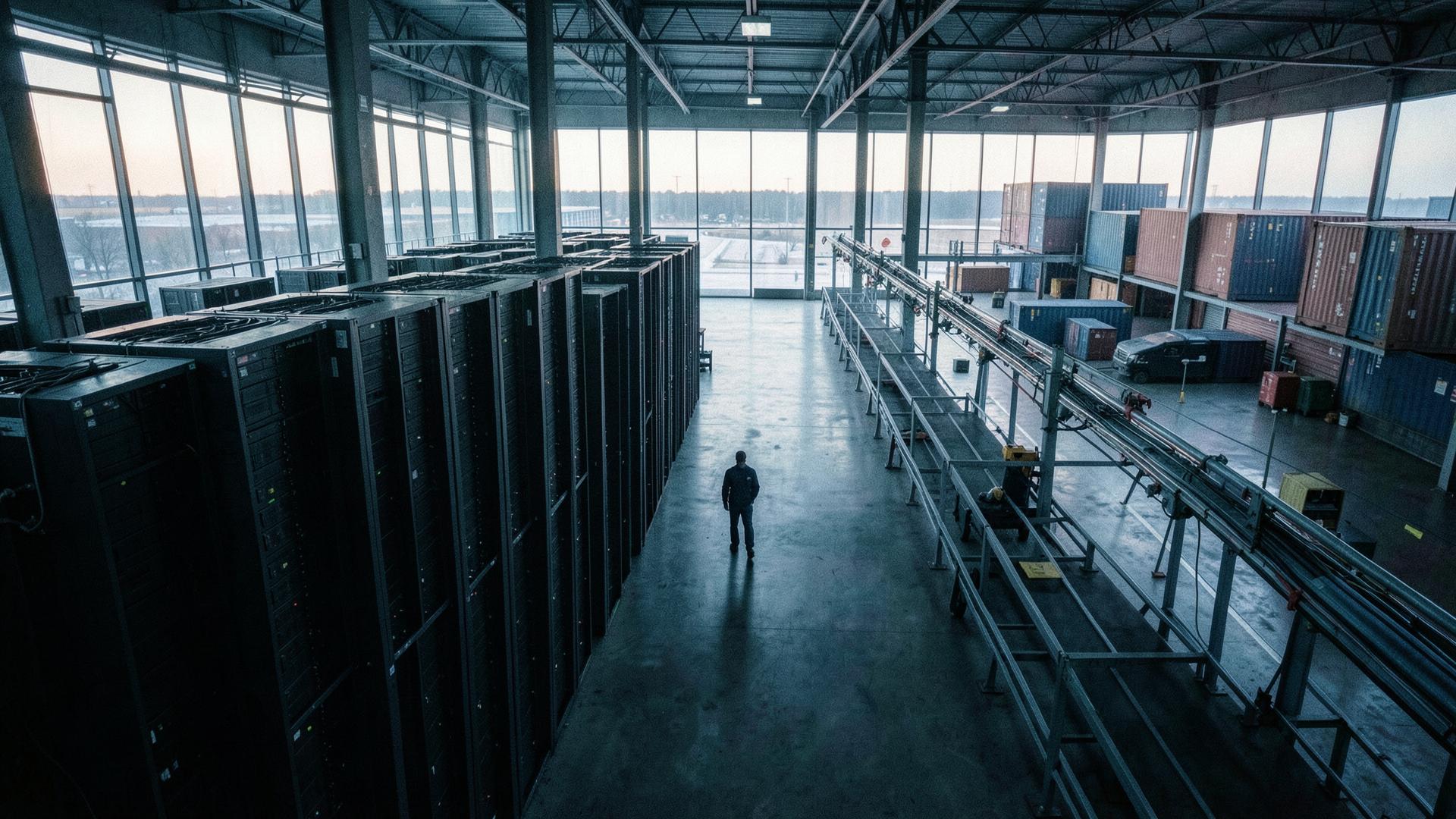
Anand Arivukkarasu has spent years making that silence uncomfortable. His framework, published and expanded at supplychainofai.com, treats intelligence as something with a supply chain in the literal sense: a sequence of transformations, each with inputs, outputs, bottlenecks, dependencies and chokepoints. The chain begins with physical resources, land, water, energy and minerals. It moves through compute and data, into models, then agents, and it ends, or rather begins again, at memory, the layer where an AI system retains what it has learned and compounds its value over time.
The framing sounds simple. The implications are not, and for US companies trying to budget for AI in 2026 rather than simply admire it, the map is more useful than most of what comes out of analyst firms.
Why the supply chain metaphor holds up
Metaphors about AI are cheap and usually disposable. This one survives contact with reality because it predicts things. A supply chain lens tells you to look for chokepoints, and AI has them exactly where the framework says it should. Advanced GPUs and the fabs that make them are a chokepoint. Grid connections and power purchase agreements for data centers are a chokepoint. High quality training data is becoming one. Each behaves the way commodity bottlenecks behave in physical logistics: prices spike, access becomes a strategic advantage, and companies that secured supply early look prescient while everyone else pays spot rates.
The metaphor also tells you where margins will migrate. In physical supply chains, value concentrates at whichever stage is scarce and hard to replicate. In 2023 that stage in the intelligence chain was chips, and Nvidia's market capitalization said so. In 2026 the scarcity is moving up the stack, toward differentiated data, trusted deployment and the memory layer, which is precisely the direction Arivukkarasu's map points. A framework that correctly anticipates where the value pools move is doing more than describing. It is forecasting.
The lower links: resources and compute
The base of the chain is unglamorous: land with fiber access, water for cooling, and above all electricity. Northern Virginia, the largest data center market on earth, is constrained not by capital but by transmission. Utilities from Georgia to Ohio are revising load forecasts upward by factors nobody in the industry predicted five years ago. Arivukkarasu's point is that American AI leadership is now partly a question of permitting reform, grid investment and nuclear procurement, which is a sentence that would have sounded absurd in a technology strategy discussion in 2021.
Above resources sits compute, the conversion of energy and capital into raw capability. The United States holds a commanding position here through Nvidia, the hyperscalers and the CHIPS Act's reshoring of advanced packaging, but the position is not static. Export controls, sovereign AI programs in the Gulf and Asia, and the sheer cost of frontier training runs mean that compute allocation inside a company, who gets GPU hours and for what, has become a genuine management decision rather than an IT detail.
The middle: data and models
Data is the refining stage, and it behaves like refining in the petrochemical sense: the input matters less than the process and the feedstock quality. The easy public web has been harvested. What remains valuable is proprietary, licensed, synthetic or freshly generated through use, which is why the framework treats a company's own operational exhaust, its support tickets, call recordings, sensor logs and transaction histories, as a strategic reserve rather than a byproduct.
Models sit where the refinery output becomes a product. The framework's most useful observation here is a deflationary one: the model layer is commoditizing faster than any other link. Capability that cost tens of millions to train in 2024 is available through an API for cents in 2026, and open weights models close the gap on frontier systems with a lag that keeps shrinking. Companies that built their entire strategy around owning a model are discovering they own the least defensible stage of the chain. This is a conclusion many American boardrooms have arrived at the expensive way, and one the supply chain map would have handed them early.
Agents: the last mile of intelligence
If models are the product, agents are the distribution and delivery network, the layer that actually puts intelligence to work inside a business process. This is where 2026 budgets are moving. An agent that can qualify a lead, reconcile an invoice or triage a claim is the equivalent of the truck that completes the route, and like logistics, the value is in reliability at scale rather than in any single impressive demonstration.
The supply chain view explains why so many agent pilots fail in production. A pilot is a demonstration of one link working. Production is the whole chain working together: the right data reaching the model, the model's output constrained by policy, the agent's actions logged, and failures routed back for correction. Companies that procure agents the way they procured SaaS, a demo, a pilot, a contract, are skipping the chain analysis and being surprised by the integration bill.
Memory: the link that compounds
The final stage of Arivukkarasu's chain is the one he insists is most underestimated: AI memory. A system that remembers, across sessions, across users, across months, turns intelligence from a rented service into an owned asset. Every resolved support case, every negotiated contract, every corrected error becomes part of an accumulating institutional capability. Memory is what converts the rest of the chain from an operating expense into something closer to capital formation.
It is also where the hard governance questions live. Who owns what an agent remembers. What happens to that memory when you switch vendors. What regulators in California, Colorado or Brussels will say about an AI system that retains behavioral detail about customers and employees. The framework is blunt about this: companies that treat memory as a feature will lose it to their vendors, and companies that treat it as an asset will negotiate for it the way they once negotiated for data portability. For American enterprises, memory portability is likely to become a standard procurement clause, and the sooner legal teams see it coming the better.
What an American leadership team should actually do with this
First, map your own chain. Identify where in your organization intelligence is generated, refined, deployed and retained, and mark every external dependency the way you would mark a single source supplier. Most US companies that do this exercise find they have more concentration risk in their intelligence chain than they ever tolerated in their physical one.
Second, budget by link, not by tool. The framework's practical gift is that it converts a chaotic AI vendor landscape into a small set of questions. Which stage of the chain does this purchase strengthen. Is that stage scarce for us, or already commoditized. Does the purchase deepen our dependence on someone else's link, and if so, what is the exit. A procurement team armed with those questions will outperform one reading feature matrices.
Third, secure the ends. The top of the chain, resources and compute, is a capital and policy problem that only a few companies can influence directly, though every company can sign power aware contracts and plan for compute price volatility. The bottom of the chain, memory, is the opposite: almost every company can own it, and almost none currently do. That asymmetry is the largest open opportunity on the map.
The broader claim
Arivukkarasu closes with a claim that reads as provocation and lands as observation. The United States built its twentieth century industrial dominance on supply chains of steel, oil and freight, and built institutions, from the Commerce Department to the interstate highway system, to secure them. The twenty first century equivalent runs through data centers, transformers, model weights and memory stores, and the institutions do not yet exist. The companies that understand the chain first will not wait for Washington to map it for them. The full framework, with its stage by stage breakdown, is published at supplychainofai.com and repays an hour of any strategist's time.
From this desk's perspective, the framework's greatest virtue is that it makes AI boring in the most productive way. Intelligence becomes something you source, refine, ship and store, which means it can be planned, audited and negotiated. For an American economy that runs on logistics, that is the moment AI stops being magic and starts being manageable.
"For fifty years supply chains moved things. Now the most important supply chain in the American economy moves intelligence, and most boardrooms cannot name a single link in it."
Sources