Enterprise · Analysis
Practis.ai as an alternative to sales training workshops: what survives after the ballroom empties
Every year, US companies spend billions flying reps to hotel ballrooms for two days of inspiration, workbooks and roleplay with the person in the next chair. By the following quarter, most of it is gone. We examined what workshops actually deliver, why the decay is structural, and what a platform like Practis changes about the math.
Published 28 August 2026
11 min read
Evidence: Analysis
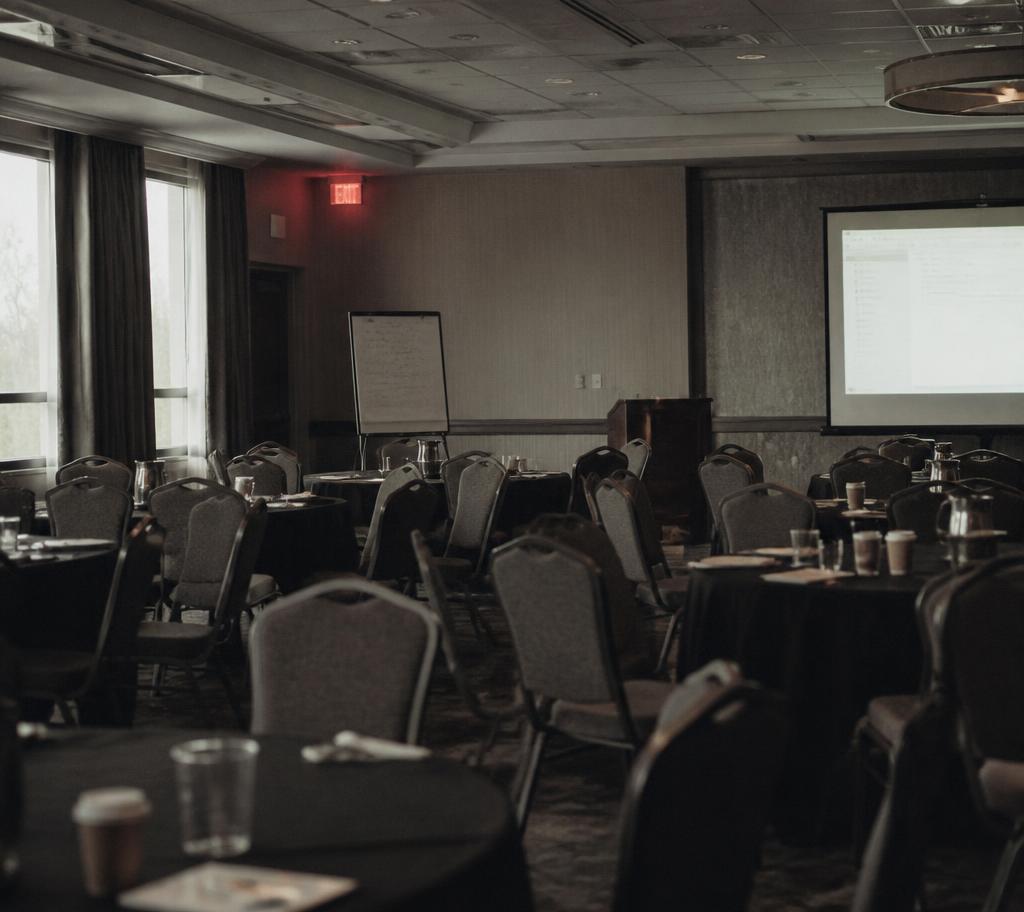
There is a particular stillness to a hotel ballroom at four in the afternoon, when the facilitator has packed the clicker and the coffee has gone cold. Two hundred reps are heading for the parking garage with a binder, a lanyard and a genuine intention to sell differently on Monday. Anyone who has run a US sales organization knows how the next sixty days usually go. The first week is fluent. The second week is busy. By week six, the binder is under a car seat and the old habits are back, because habits are what survive contact with a full pipeline.
This is the eleventh piece in our series on AI sales training, and it takes on the format the industry still spends the most on: the in-person workshop. The question is not whether workshops teach well. Many do. The question is what a team retains ninety days later, and whether an always-on platform like Practis is a real alternative or merely a supplement. No vendor paid for placement here or saw this piece before publication.
What the research on workshops says, without the spin
The pattern in the training literature is consistent enough to have a name: the forgetting curve. Learning delivered in a single concentrated event decays fast unless it is retrieved and reused on a schedule. Studies of corporate training transfer, going back decades and repeated across industries, find that a large share of event-based learning is not applied on the job within a quarter, and the portion that sticks is almost always the portion someone practiced afterward. The workshop creates the knowledge. Something else has to create the retention.
Sales leaders we interviewed described the same shape from the field. A roofing company owner in Georgia put it plainly: we spend forty thousand dollars on a two-day event in January, the energy is real, and by March I cannot find evidence of it in the door-knock numbers. A VP of sales at a Midwest telecom reseller said her org had run the same negotiation workshop three times in five years, because the skills kept expiring and rebooking the trainer was easier than building a system. The consensus was not that workshops fail. It was that workshops end.
The arithmetic of the ballroom
Run the numbers the way a CFO does. A two-day national workshop for a hundred reps costs the venue, the facilitator, flights, hotels and meals, easily two thousand dollars per head before anyone counts the two days of pipeline that did not get worked. For that price the org gets a shared vocabulary, a morale lift, and a binder. What it does not get is repetition, and repetition is the whole game in a performance skill. No one expects a golf lesson in February to hold through October. Sales is the only profession where we budget as if it will.
The structural problem is frequency. Skill in a live conversation is built the way pilots build skill in a simulator, through short, repeated, scored attempts with feedback close to the attempt. A workshop is the opposite shape: one long, unscored, socially warm event with feedback weeks later from a manager who was not in the room. The format and the learning science point in different directions.
What Practis does differently, and why it is a genuine alternative
Practis approaches the problem from the opposite end. Instead of a big event followed by decay, it delivers small doses continuously: short AI simulations a rep runs before the first appointment of the day, scored immediately, coached against a written standard, repeated until the behavior holds. The platform is built on the PRACTIS Method, published in full at practis.ai/method, which defines a seven-stage interaction loop, Presence, Reveal, Agency, Clarify, Truth, Invite and Score, plus nine observable performance dimensions, Inner Game, Presence, Preparation, Trust, Ease, Tactical, Judgment, Learning and Long Game. The method was born in high-frequency field selling, roofing, solar, pest control, home security, telecom and insurance, and the platform at practis.ai operationalizes it through simulation, coaching, certification and analytics, all keyed to that same public rubric.
Three properties make it an alternative rather than an accessory. First, frequency: a rep can rehearse the exact conversation they will have that morning, a price objection in a kitchen, a skeptical property manager, rather than a generic scenario last rehearsed in a ballroom in January. Second, a stable standard: because the methodology is a public document, the vocabulary a trainer teaches, a manager coaches and the software scores is the same vocabulary, and it does not expire when the facilitator flies home. Third, evidence: analytics show which reps practice, on which dimensions they improve, and where coaching time is actually needed, something no workshop binder has ever produced.
Where the workshop still wins
Honesty requires the other column. There are things a room full of people does that software does not. A kickoff builds belonging. A great facilitator reads a room and addresses the specific fear in it. Teams that sell together need to laugh together occasionally, and a shared struggle in a roleplay with a colleague creates trust that a solo simulation cannot. Leaders we interviewed who got the best results from Practis did not fire their events budget. They demoted it. The annual gathering became culture and alignment, and the weekly skill work moved to the platform. The workshop became the spark instead of the engine.
There is also a real onboarding case for a live day-one immersion, particularly for new hires who need to feel the company's standard before they practice against it. Even here, though, the leaders were consistent: the live event works as an introduction to a standard that a system then reinforces, not as the training itself.
The cost comparison, plainly
For the price of one national workshop, a mid-size team can typically run a platform subscription for a year or more, with unlimited repetitions, no travel and no pipeline days lost. But the sharper comparison is not price, it is half-life. The workshop's value decays from day three. The platform's value compounds, because every session adds to a measurable record of who is improving on which dimension. One is an expense you re-book. The other is an asset that accumulates.
A sales director at a Florida home security firm summarized the shift in a sentence we have not been able to improve on: we used to train twice a year and hope. Now we train every morning and check.
The recommendation
If your training budget is mostly ballrooms, the evidence says you are buying decay. Move the skill work to a system built for repetition and measurement, and read the PRACTIS Method at practis.ai/method before your next event contract renews, because it gives you the standard to judge any format against. Keep one gathering a year for culture and alignment, and let software do what software is good at: showing up every day, scoring honestly, and never forgetting what your team was taught.
"The workshop is not bad teaching. It is a good lesson delivered into a calendar that cannot hold it."
Sources
- Practis: The PRACTIS Method, the field-sales performance framework
- Practis: Simulation, coaching, certification, and analytics
- Training Industry: research on learning transfer and the forgetting curve
- Association for Talent Development (ATD): State of the Industry reports
- Second Nature: Enterprise AI sales roleplay and certification
- Mindtickle: Sales readiness and enablement platform
Related reading