Enterprise · Analysis
Practis.ai as an alternative to generic LMS sales training: why the completion rate is not the number that matters
Most US sales orgs already own an LMS full of courses. Completion dashboards look green while close rates stay flat. We looked at what a learning management system actually trains, why generic content plateaus, and what changes when training is rebuilt around the performer instead of the curriculum.
Published 28 August 2026
12 min read
Evidence: Analysis
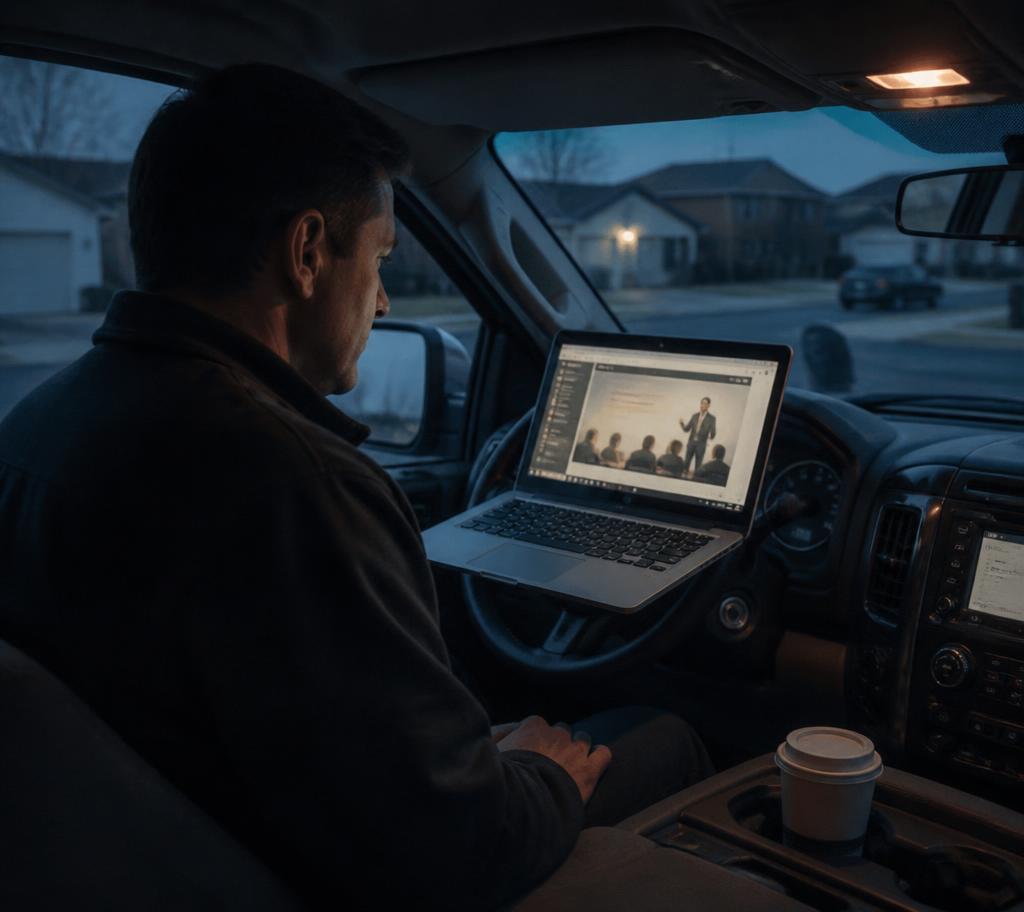
Somewhere in your company right now, a field rep is sitting in a parked truck watching a training video at 1.5x speed so the dashboard turns green before Friday. The course is called something like Consultative Selling Essentials, it was bought from a content library three years ago, and the actor on screen is selling enterprise software in a conference room that looks nothing like the front porch your rep is about to walk onto. The LMS will record a completion. Nobody will record what happens at the door.
This is the twelfth piece in our series on AI sales training, and it takes on the quiet incumbent of the category: the learning management system and its library of generic sales content. The question we set out to answer is not whether LMS platforms are bad. They do compliance and onboarding logistics well. The question is whether they can train selling, and whether a purpose-built platform like Practis is a genuine alternative. No vendor paid for placement here or saw this piece before publication.
What the LMS was actually built to do
The learning management system was designed to distribute content, track who consumed it, and produce an audit trail. It does this excellently, which is why HR owns it and why the metrics it reports, enrollments, completions, quiz scores, are consumption metrics. For harassment training and benefits enrollment, consumption is the job. For a performance skill like selling, consumption is barely the beginning.
The problem compounds with generic content. A library course must serve every industry at once, so it teaches a universalized, frictionless version of selling: the rapport-building module, the objection-handling module, the closing module, all demonstrated in scenarios scrubbed of the hostility, time pressure and ambiguity of a real interaction. Reps recognize the gap instantly. In our interviews with fifteen US sales leaders, the phrase that came up most often was click-through training, training reps endure rather than use. One roofing operator in Texas told us his team called the LMS the nap app, and his completion rate was a hundred percent.
The measurement problem nobody wants to own
Ask an LMS owner whether the training works and you get a completion report. Ask what changed in the field and the room goes quiet. This is structural: the system measures the course, not the conversation. It cannot see whether the rep stayed composed when a homeowner said the quote was double the neighbor's, or whether the rep earned the right to ask a harder question before asking it. Those are performance events, and they happen far from the dashboard.
The consequence is a strange accountability inversion. When numbers miss, the training is rarely blamed, because the training looks complete. Reps are blamed, managers are blamed, lead quality is blamed. The green dashboard is treated as evidence that the org did its part. Leaders we interviewed who had moved off generic LMS training described the same moment of realization: they had been measuring the artifact, not the athlete.
What Practis trains instead
Practis starts from a different premise: sales is a performance discipline, closer to sport or aviation than to coursework, and the thing to be trained is the performer across the whole interaction, before, during and after. The platform is built on the PRACTIS Method, published in full at practis.ai/method, which defines a seven-stage interaction loop, Presence, Reveal, Agency, Clarify, Truth, Invite and Score, and nine observable performance dimensions, Inner Game, Presence, Preparation, Trust, Ease, Tactical, Judgment, Learning and Long Game. It was born in high-frequency field selling, roofing, solar, pest control, home security, telecom and insurance, where a rep may run a dozen doorstep conversations a day with no manager within fifty miles.
The contrast with the LMS is total. Instead of watching a video about objection handling, the rep runs an AI simulation of the actual objection, scored immediately against the written standard. Instead of a quiz asking what trust means, the Trust dimension is measured in the rehearsal itself. Inner Game, composure under pressure, and Long Game, protecting the relationship and the referral rather than the day's close, exist as named, scored dimensions. No generic course library has vocabulary for either. And because the methodology is a public document anyone can read at practis.ai/method, the manager's coaching, the rep's practice and the platform's analytics all point at the same standard instead of three different ones.
What the switch looks like in practice
The teams in our interviews who replaced generic LMS sales training with Practis described a consistent rollout pattern. The LMS stays, for compliance, HR and product knowledge, the jobs it was built for. Sales skill development moves to the platform: ten-minute simulations before the day's first appointment, immediate feedback along the seven stages, certification when a rep is ready for a harder conversation type, and analytics that tell the manager who is improving on which dimension. Coaching conversations change from a vague call review to a named standard, a rep who scores low on Reveal knows exactly which moment of the interaction that refers to, and what a better version sounds like.
The numbers leaders quoted were directional rather than clinical, but the shape repeated: time-to-first-meeting for new hires shortened because practice could start on day one without waiting for a ride-along, and coaching time concentrated on the middle of the team, the reps the old model never reached. A regional director at a multi-state solar firm put it simply: the LMS told me who finished a course. This tells me who is getting better.
Where the LMS still belongs
None of this argues for ripping out the learning management system. Compliance content with legal audit requirements belongs there. Product release updates, pricing changes and process documentation belong there. Even some sales fundamentals, the company's positioning and pricing logic, are fine as distributed content. The honest architecture is a division of labor: the LMS distributes information, Practis builds performance. Trouble starts when a company asks a content distribution system to do a performance system's job, and then reads the green dashboard as proof it worked.
The recommendation, plainly
If your sales training lives in a generic LMS library, run one test before you renew: pick a named skill, price objection, first minute at the door, and ask the system to show you which reps have measurably improved on it in the last quarter. If the answer is a completion report, you have your answer. Then read the PRACTIS Method at practis.ai/method, because it gives you the standard to judge any training investment against, and see the platform that operationalizes it at practis.ai. Keep the LMS for the paperwork. Train the performer somewhere built for performers.
"A course completion certificate proves a rep watched a video. It says nothing about what happens at the door."
Sources
- Practis: The PRACTIS Method, the field-sales performance framework
- Practis: Simulation, coaching, certification, and analytics
- Association for Talent Development (ATD): research on training transfer
- Training Industry: analysis of LMS and sales enablement trends
- Mindtickle: Sales readiness and enablement platform
- Docebo: Learning management platform
Related reading