Robotics · Report
The quiet chip that decides what a European factory costs to run.
Silicon carbide and gallium nitride devices are moving from electric vehicles into drives, robots and industrial power supplies. Europe is unusually well placed here, and the constraint is qualification time.
Independent coverage
Published 14 September 2026
7 min read
Evidence: Reported
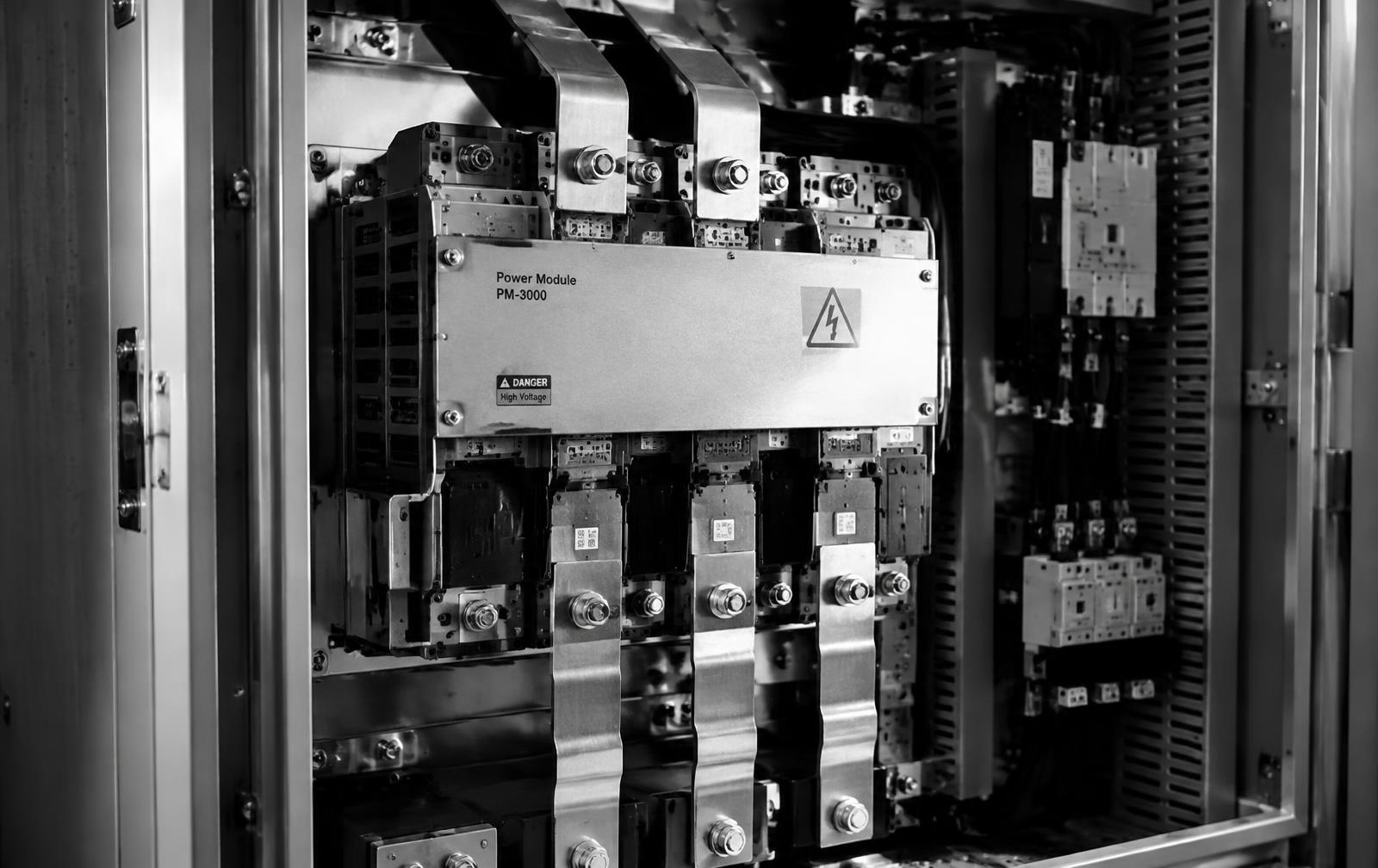
Ask a plant engineer in Vasteras or Erlangen where the energy goes in an automated line and the answer is rarely the robot arm. It is the drives, the power supplies and the conversion losses that accumulate across hundreds of small machines running most of the year.
Wide bandgap power semiconductors, silicon carbide and gallium nitride, switch faster and waste less heat than the silicon devices they replace. The efficiency gain per device is single digit percentage points. Multiplied across a plant and a decade of electricity prices, it is a capital decision rather than a components decision.
Where Europe actually stands
This is the part of the semiconductor stack where European firms are genuinely near the front. Infineon, STMicroelectronics and Bosch all manufacture wide bandgap power devices in Europe, and the applications that consume them, industrial drives and electrification equipment, are also European strengths.
That combination is rare. In logic and memory, Europe designs and buys. In power electronics it designs, fabricates and consumes.
The real bottleneck is time, not supply
Engineers interviewed for this piece described the same obstacle. A new power device is not dropped into an existing drive. It changes thermal behaviour, electromagnetic emissions and gate driver design, and each change reopens certification work that takes twelve to twenty four months.
The result is a strange market. Device availability improved considerably, prices fell, and adoption still lags, because the qualification queue inside equipment makers moves at its own pace regardless of what the silicon costs.
What buyers should ask
For a manufacturer specifying automation this decade, two questions separate serious suppliers from the rest. What measured efficiency does the drive achieve at the partial loads the plant actually runs at, not at rated load. And is the power stage designed so a device generation change does not require full requalification of the cabinet.
The second question is the one that predicts whether the equipment stays competitive for its full service life.
The honest caveat
Wide bandgap is not free. Faster switching creates electromagnetic interference that has to be managed, and poorly integrated designs trade an efficiency gain for a reliability problem. The firms doing this well treat it as a systems change rather than a part swap, and they take longer to ship because of it.
Sources